
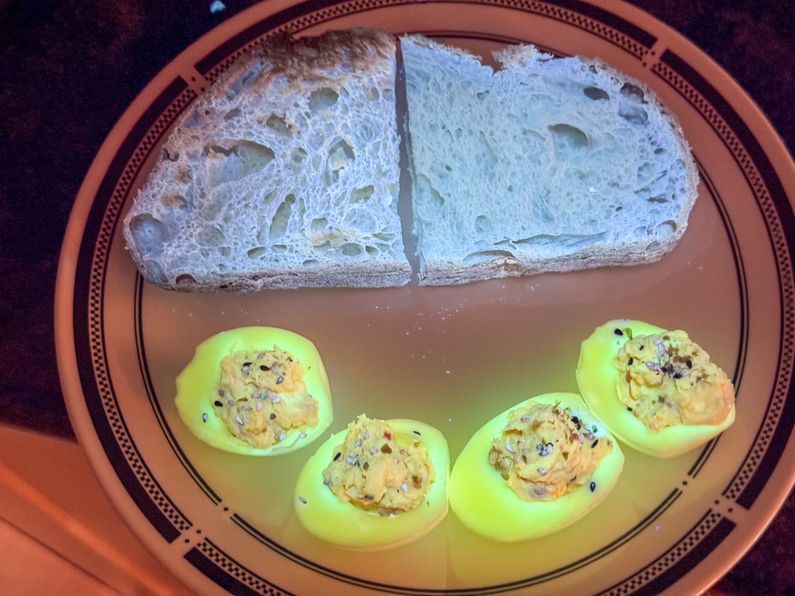
Fluorescent Thanksgiving
When I shared images of Jolly Ranchers and other candy glowing under UV light, one common reaction I got was "oh wow we probably shouldn't be eating that then." If you see glowing under blacklight as a sign that food is bad for you, I have bad news for you about... well, basically, all food.
Cranberries, for example. Famed superfood, they're packed full of vitamins and antioxidants. They also glow green, red, and orange under 365 nanometer UV light.
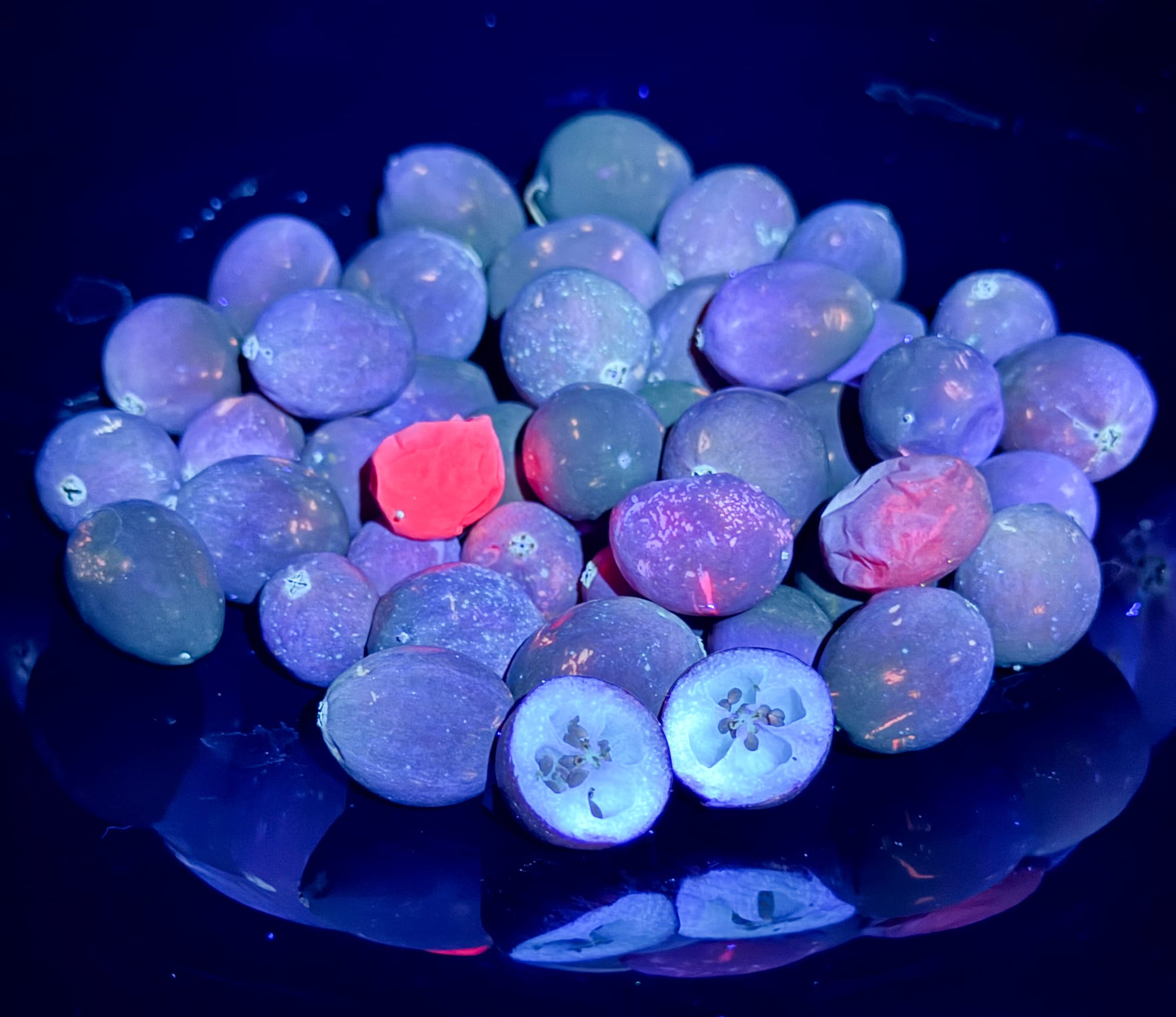
Interestingly, the older, wrinklier cranberries glow much brighter red than the merely ripe ones. I'm not the first to notice a change in fluorescence as produce rots, although there seem to be a bunch of different chemicals contributing to the effect.
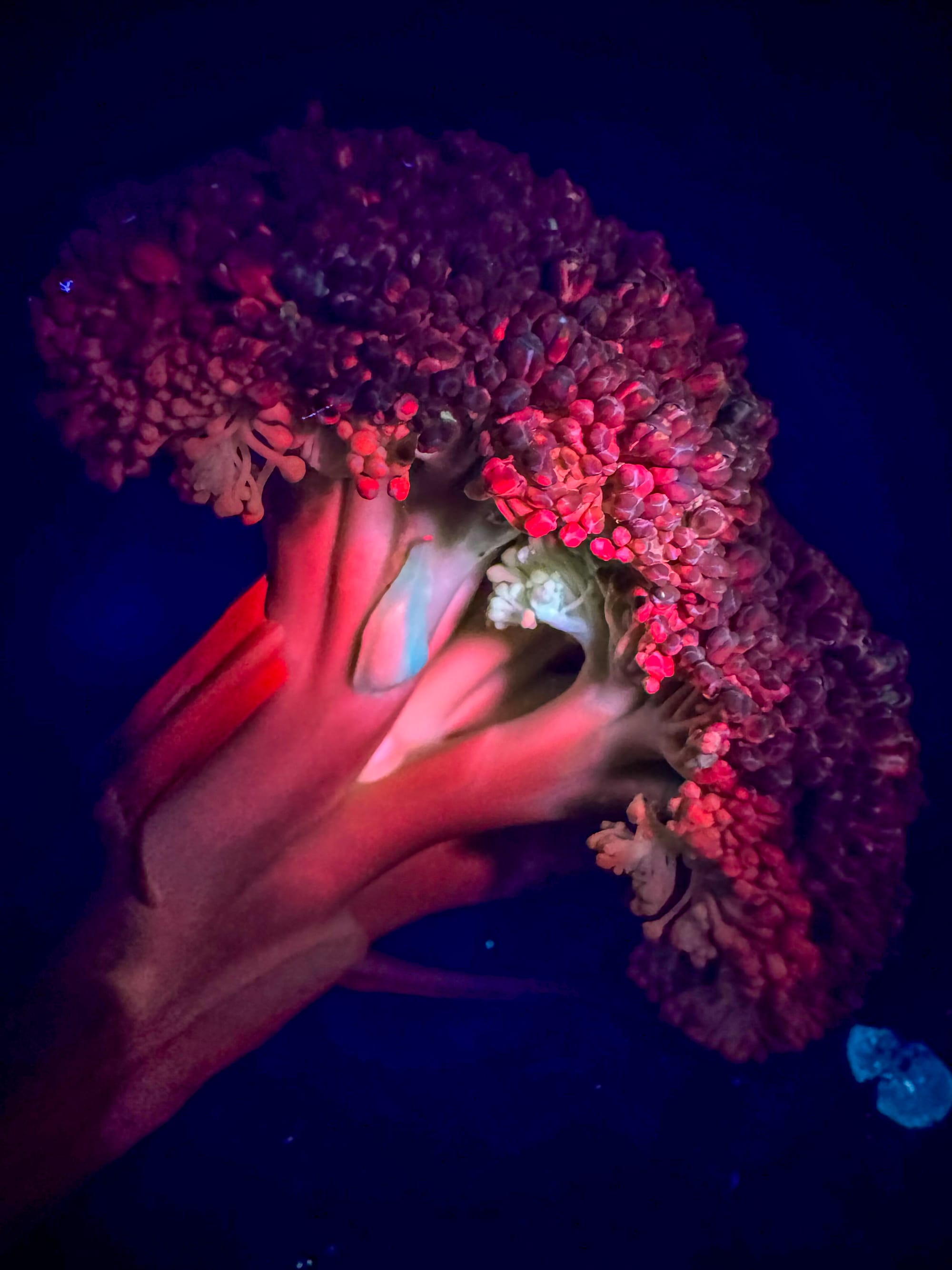
Green vegetables are particularly fun-looking. Here's Brussels sprouts.
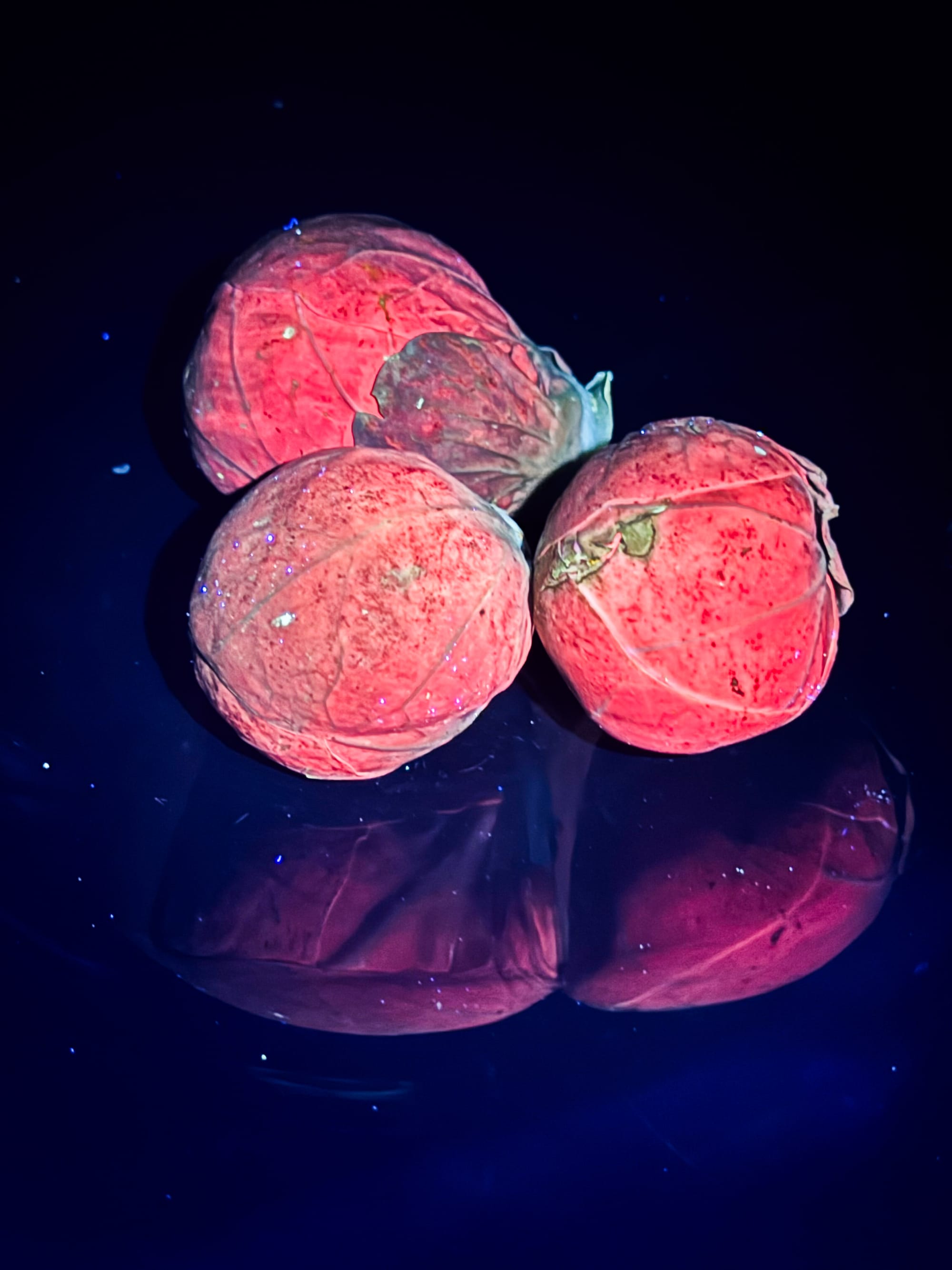
And broccoli
And green lettuce
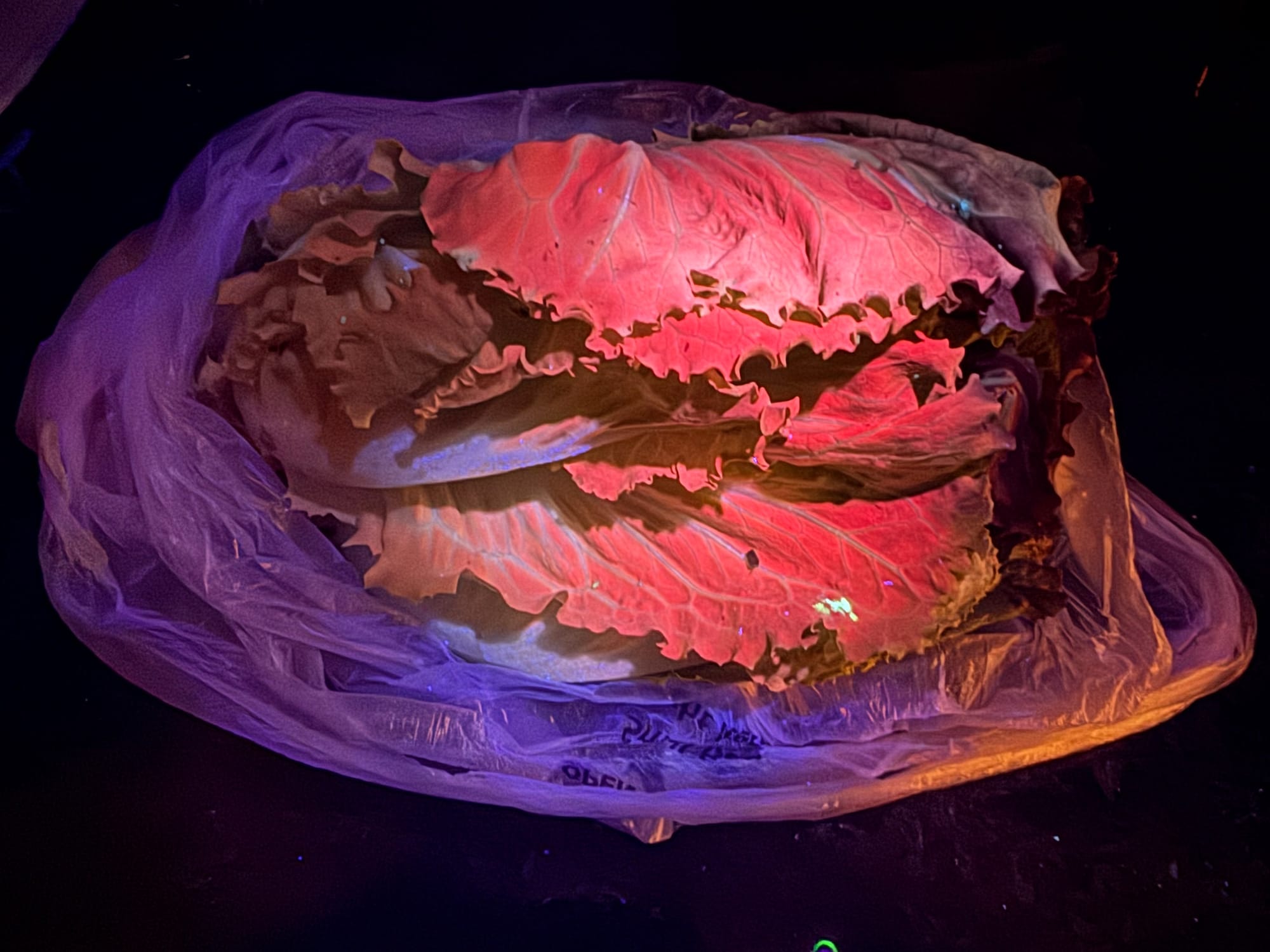
What's glowing red in these leafy greens is chlorophyll, the chemical that gives plants their green color and allows them to use sunlight to make sugar. As the chlorophyll absorbs a wide range of colors of light (including UV), some of that energy powers sugar-making, some of that energy turns into heat, and some of that energy gets released as red light. People who study plant metabolism use red chlorophyll fluorescence as a measure of how rapidly the chlorophyll is doing its thing.
Green beans surprised me, though.
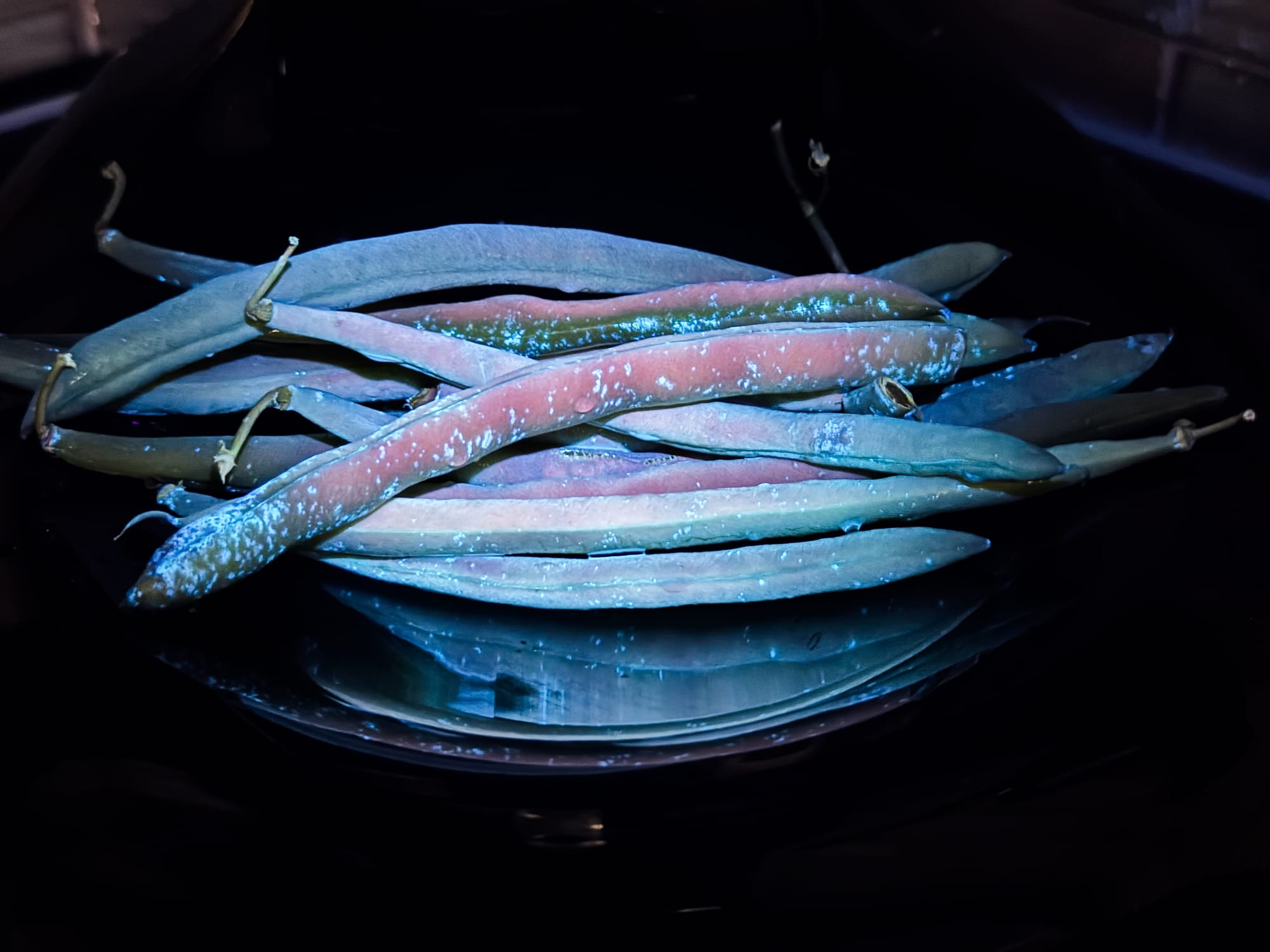
They glow in chlorophyll red, but they also appear speckled with bright blue. Upon closer inspection, the bright spots correspond to brown spots on the beans themselves, and are particularly visible on older beans.
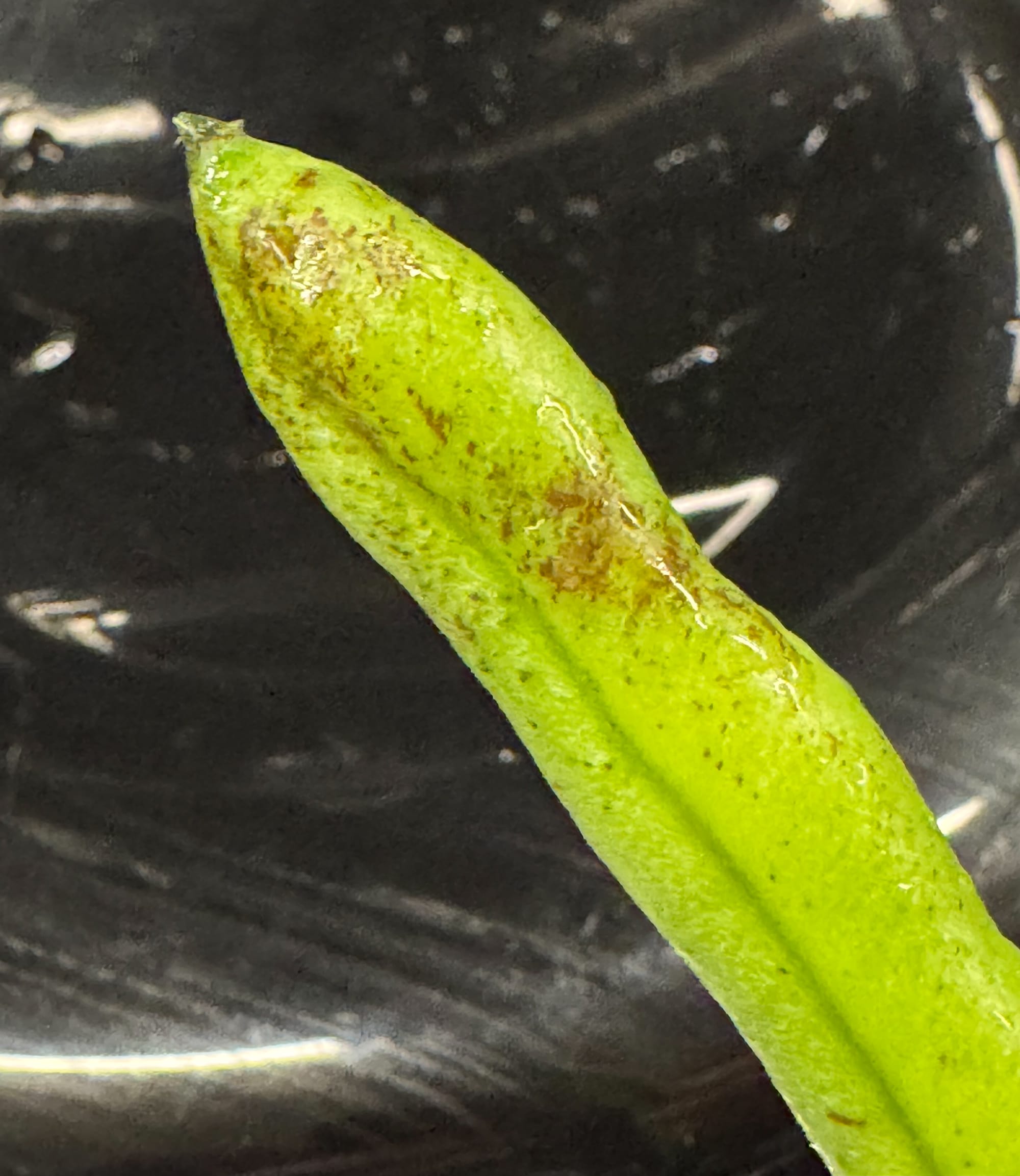
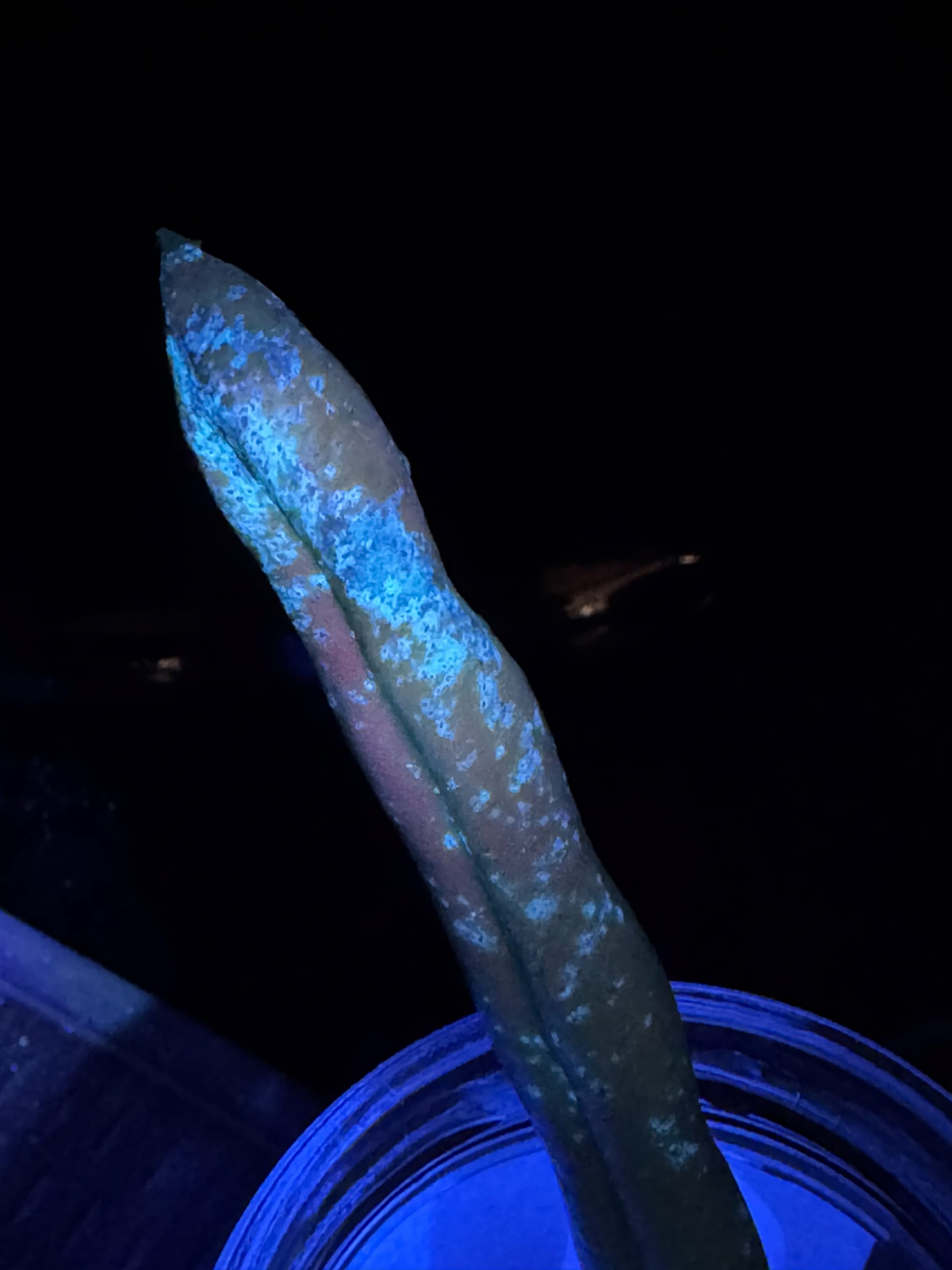
First image: a green bean that has seen better days, and is showing brown speckles against its normal green color. Second image: the same green bean viewed under 365 nm illumination. The green background has turned faintly red, and the brown speckles are now highly visible as glowing teal spots. They're much more visible than in the original image.
Want to know what else surprised me? Eggs.
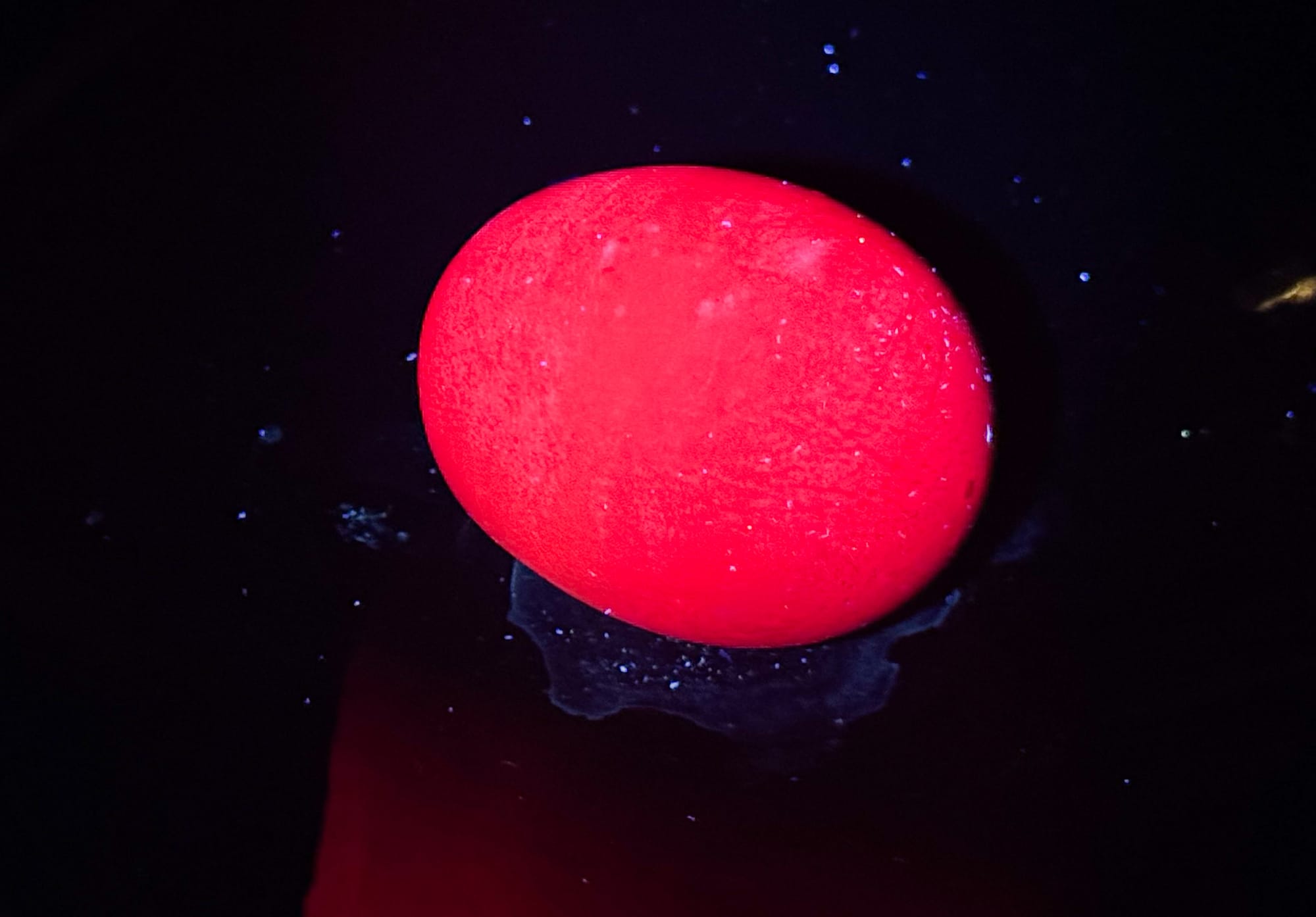
This is not a dyed Easter egg, but an ordinary brown egg viewed under UV. The brown eggs glow much brighter than the white eggs, but white eggs still noticeably glow. (Apparently the chemical that's glowing is protoporphyrin IX, related to the hemoglobin that gives our blood its red color.) Like with the red glow of chlorophyll, the fluorescence isn't really for a particular purpose, but seems to be a byproduct of the other chemistry that's going on. Probably the chickens don't even know that their eggs glow under UV - they're hanging out under regular white lights, not at raves.
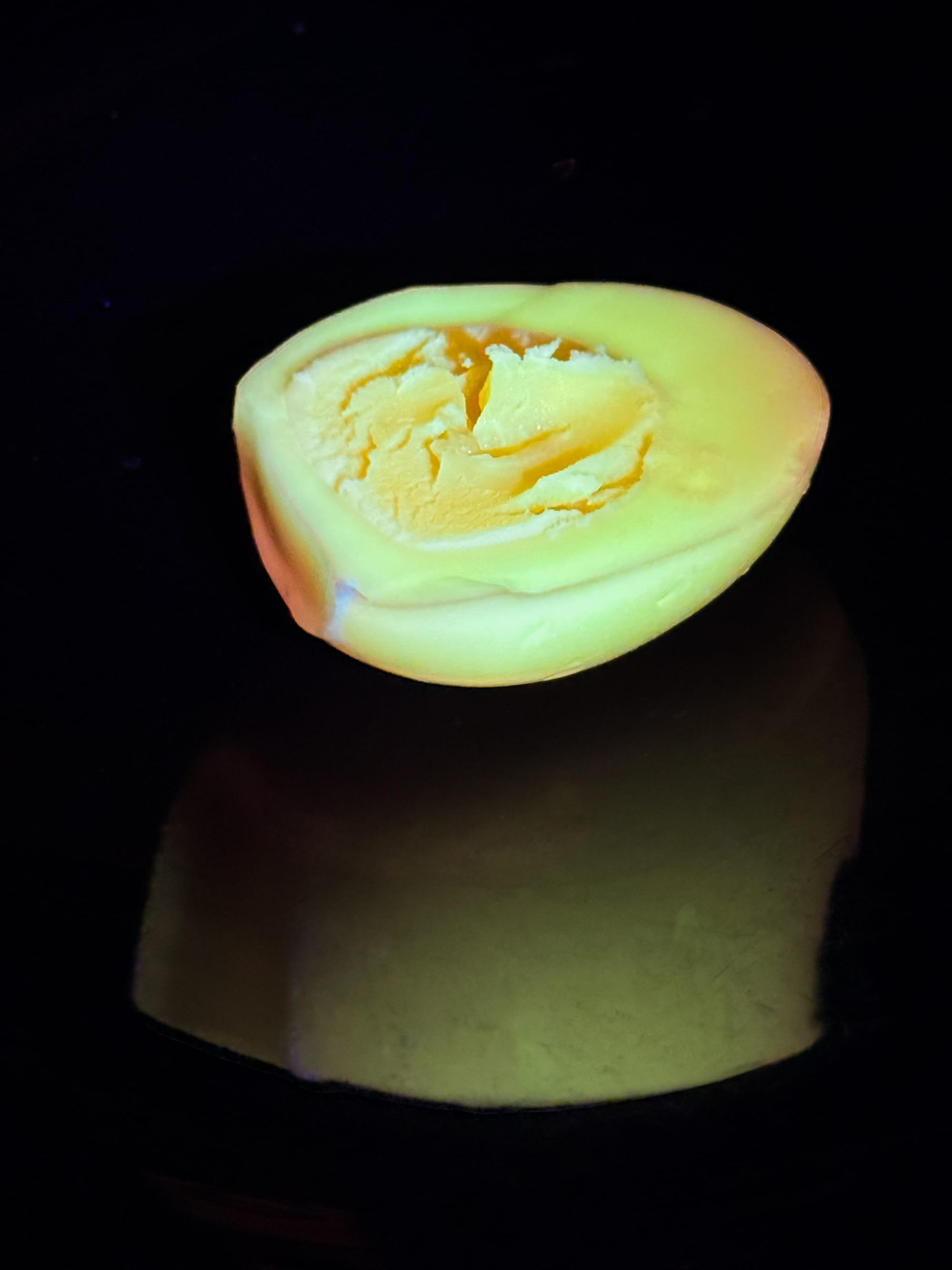
The insides of eggs also glow, but in yellow, both the yolks and the whites.
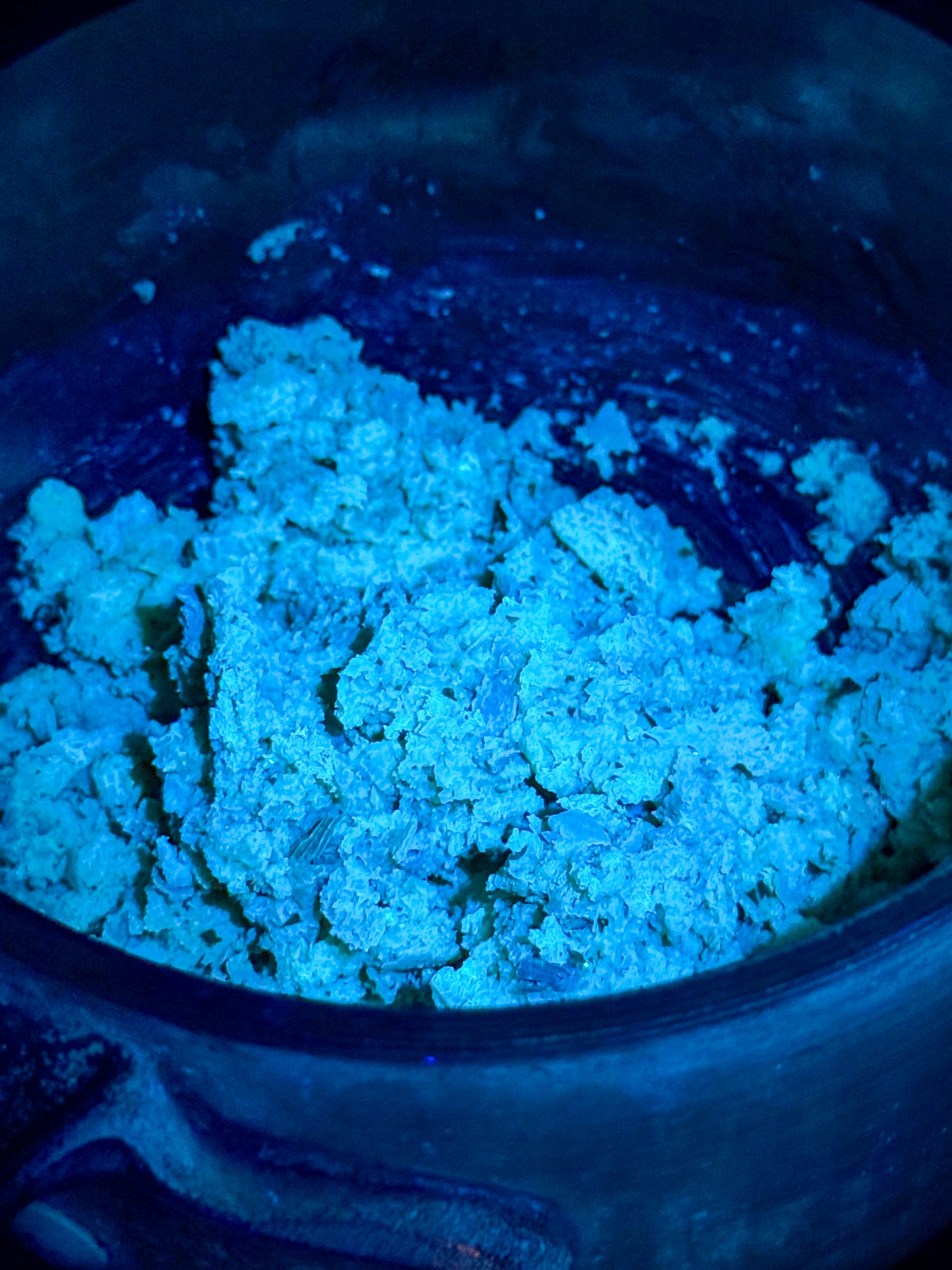
Starchy foods seem to glow blue-white. Here's some prepared StoveTop stuffing (chicken flavor).
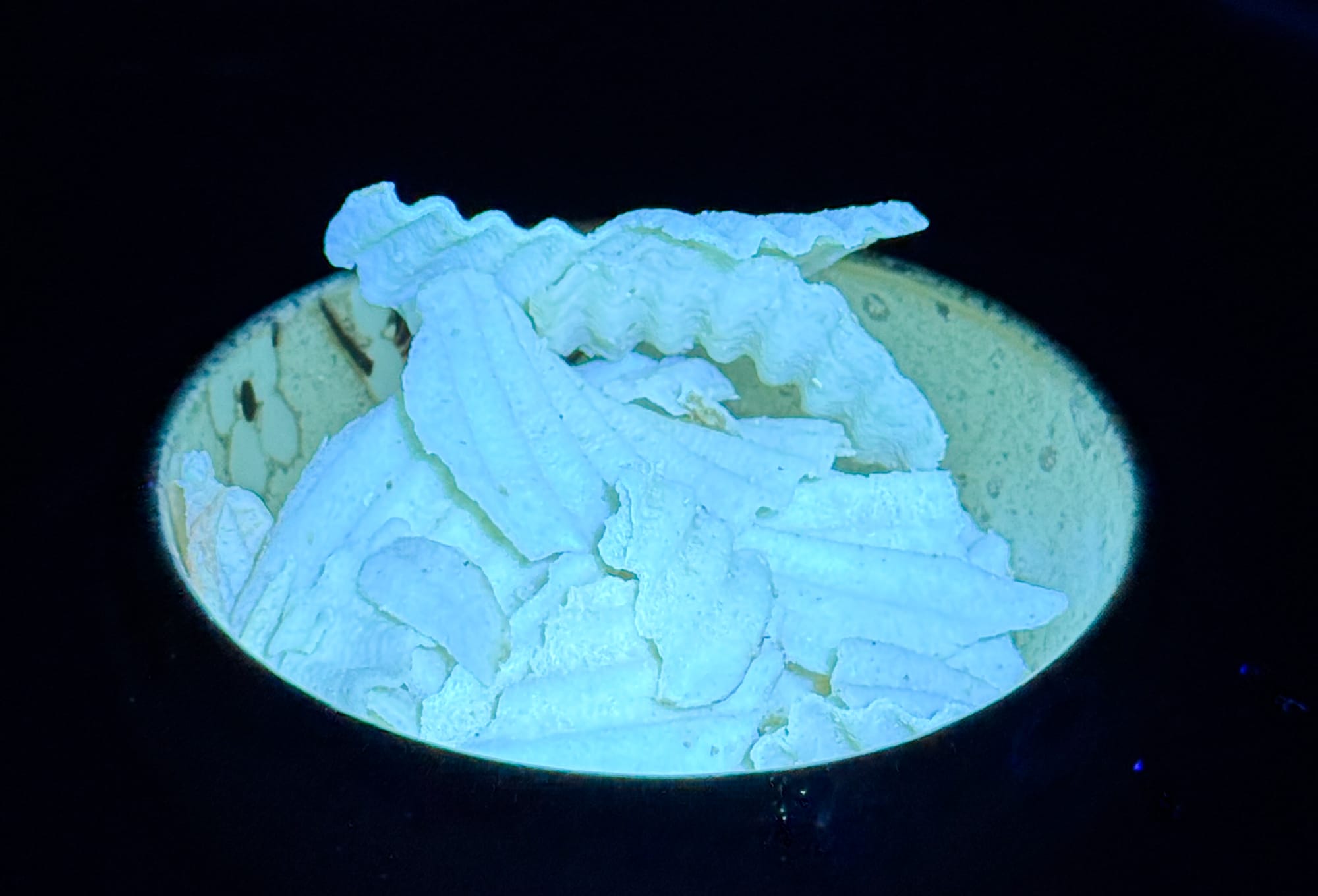
Potato chips
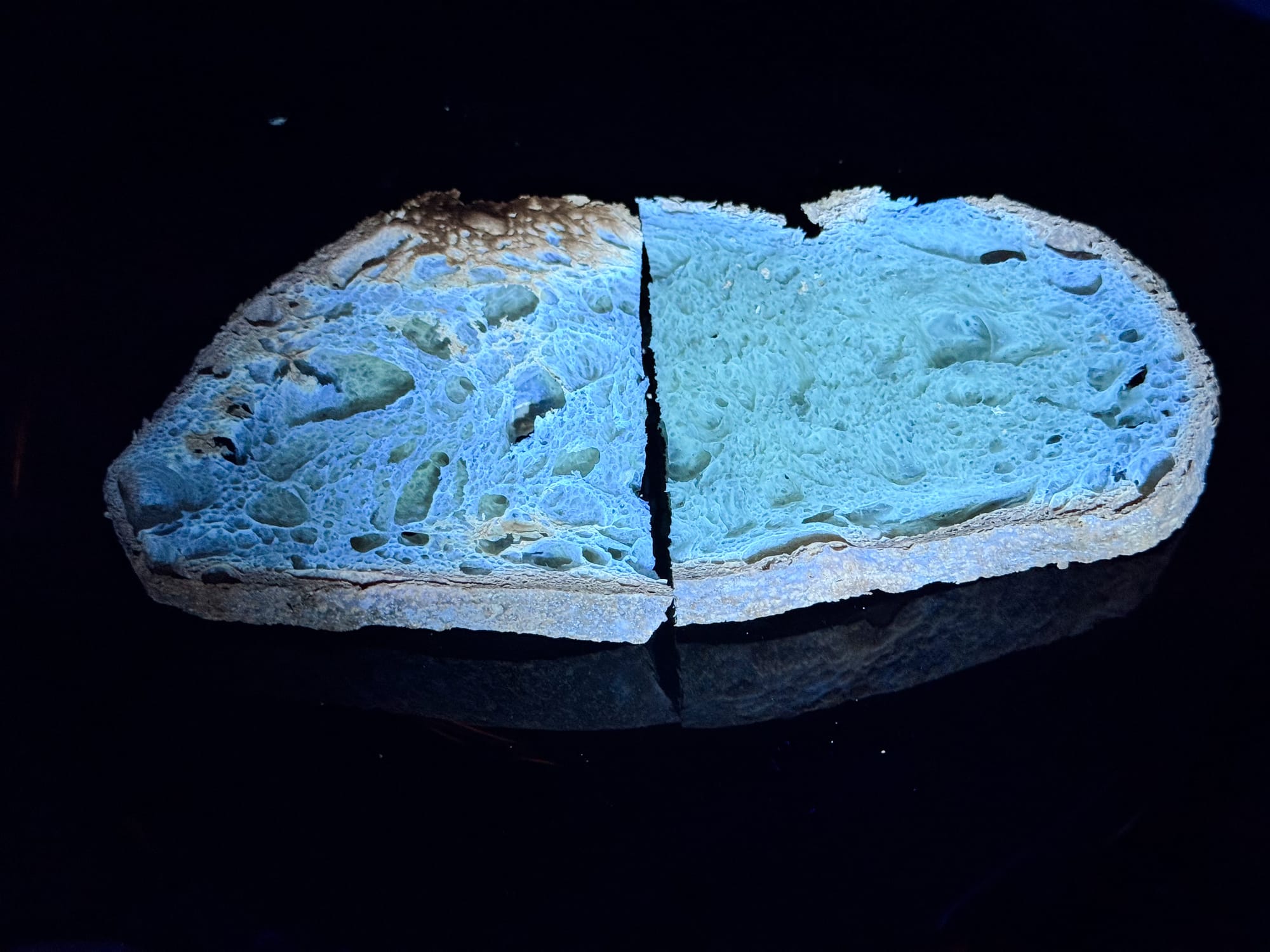
Bread also glows blue, but crusty, drier, or toasted areas look different. It looks to me like they might be missing something that glows yellowish in fresh bread, and/or absorbing some of the glow from nearby areas of bread and only letting toasty brown colors pass.
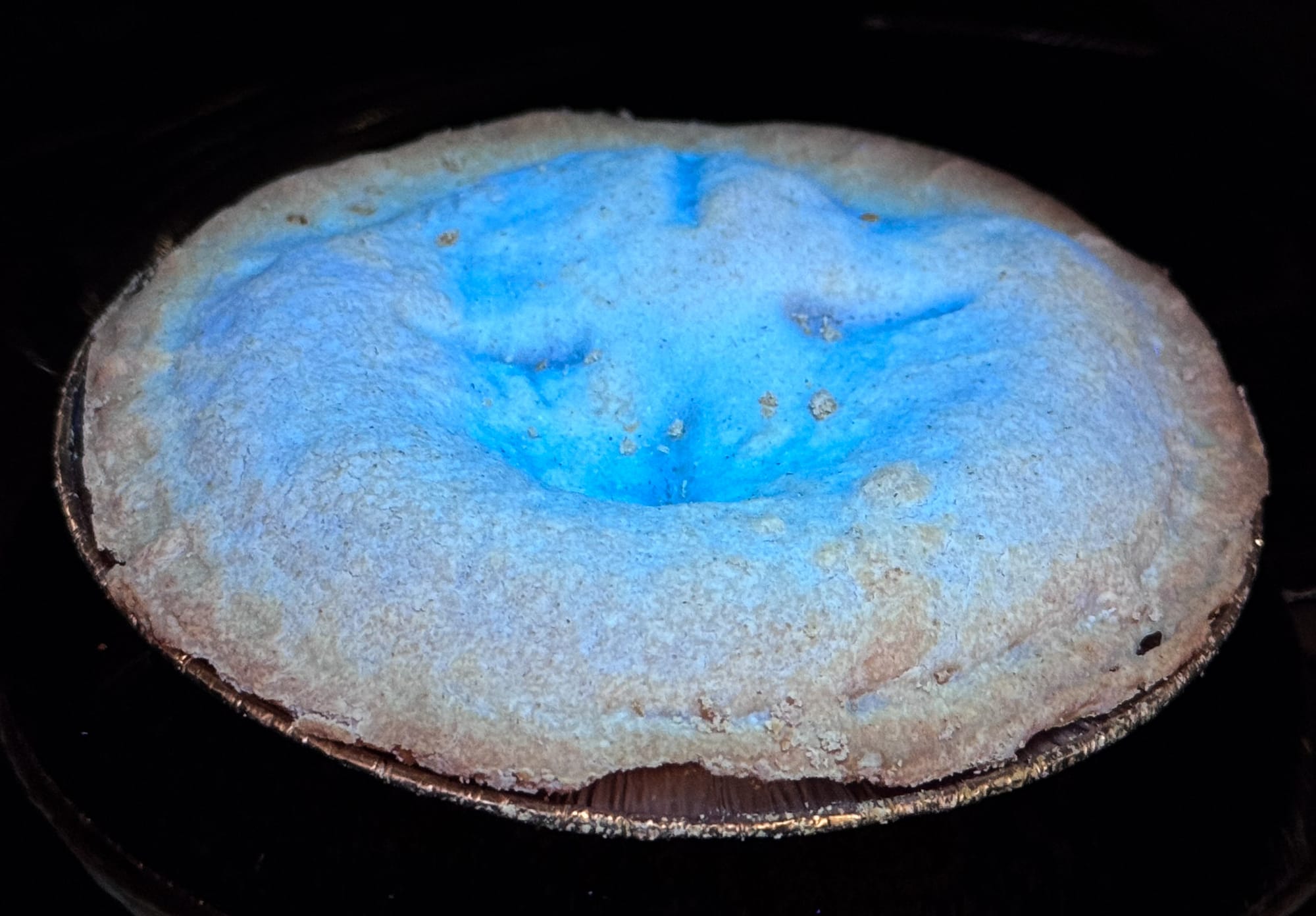
Pie crust glows like bread does, as seen in this apple pie. Wheat and oats are fluorescent blue when illuminated with 365 nm light, although at least the authors of the 1982 paper about that didn't know why.
The filling of pumpkin pie and pecan pie are harder to call an identifiable color. They kind of look like themselves, but with a bluish cast to everything. The closer you look at a pecan pie, the more weird colors there are in there. As the list of ingredients gets more complicated and is transformed by cooking, there could be any number of ingredients fluorescing, or inhibiting each others' fluorescence.
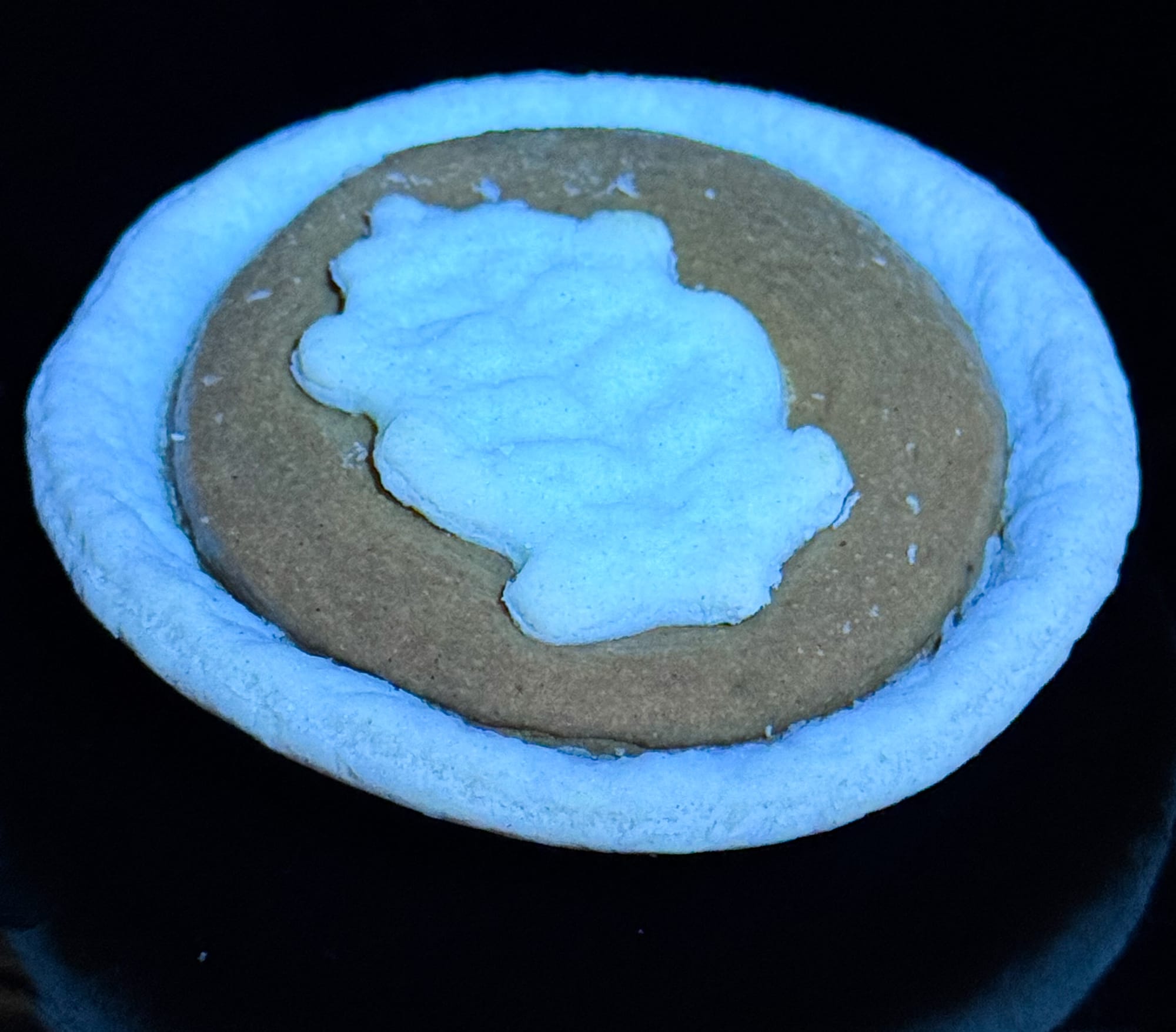
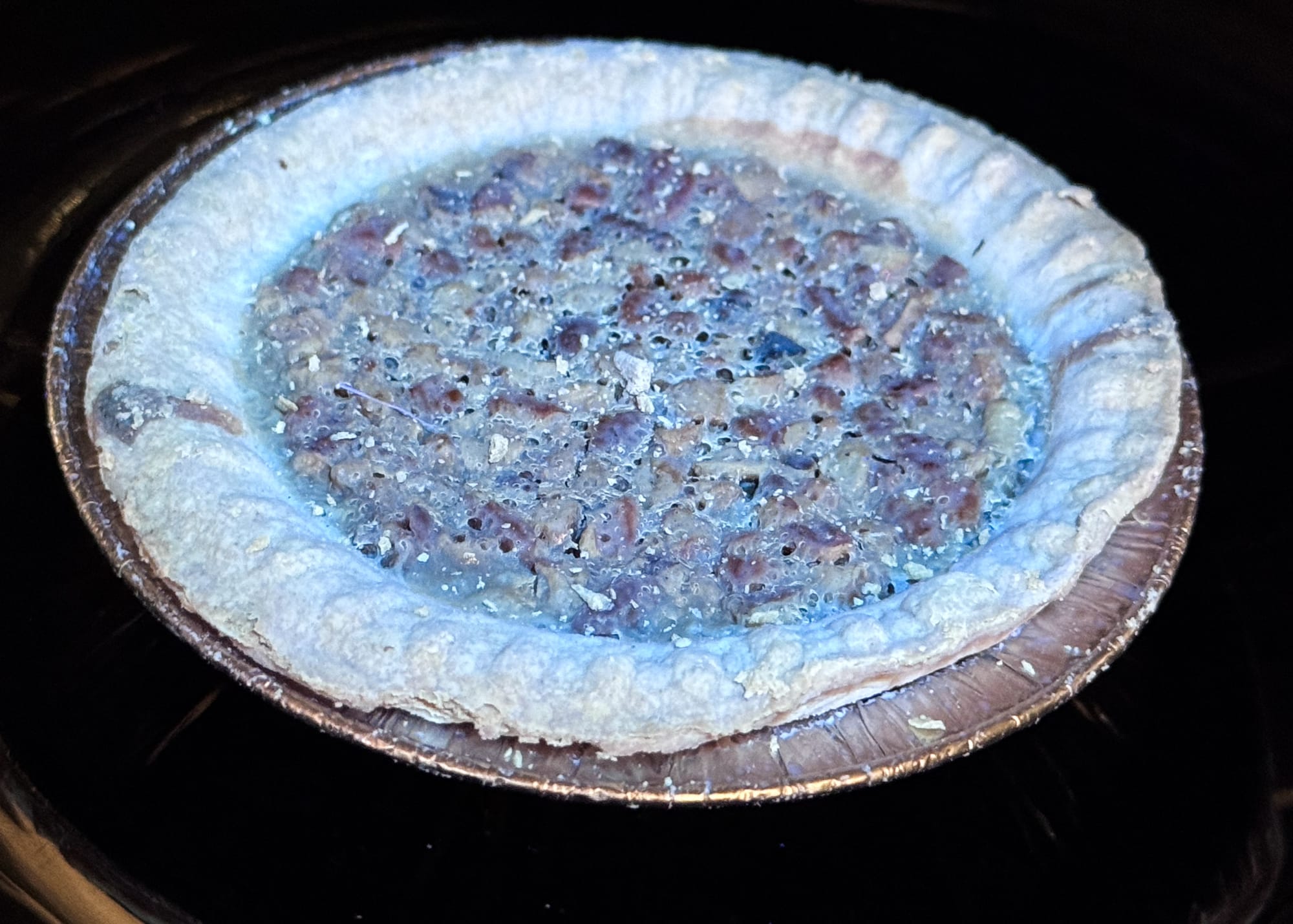
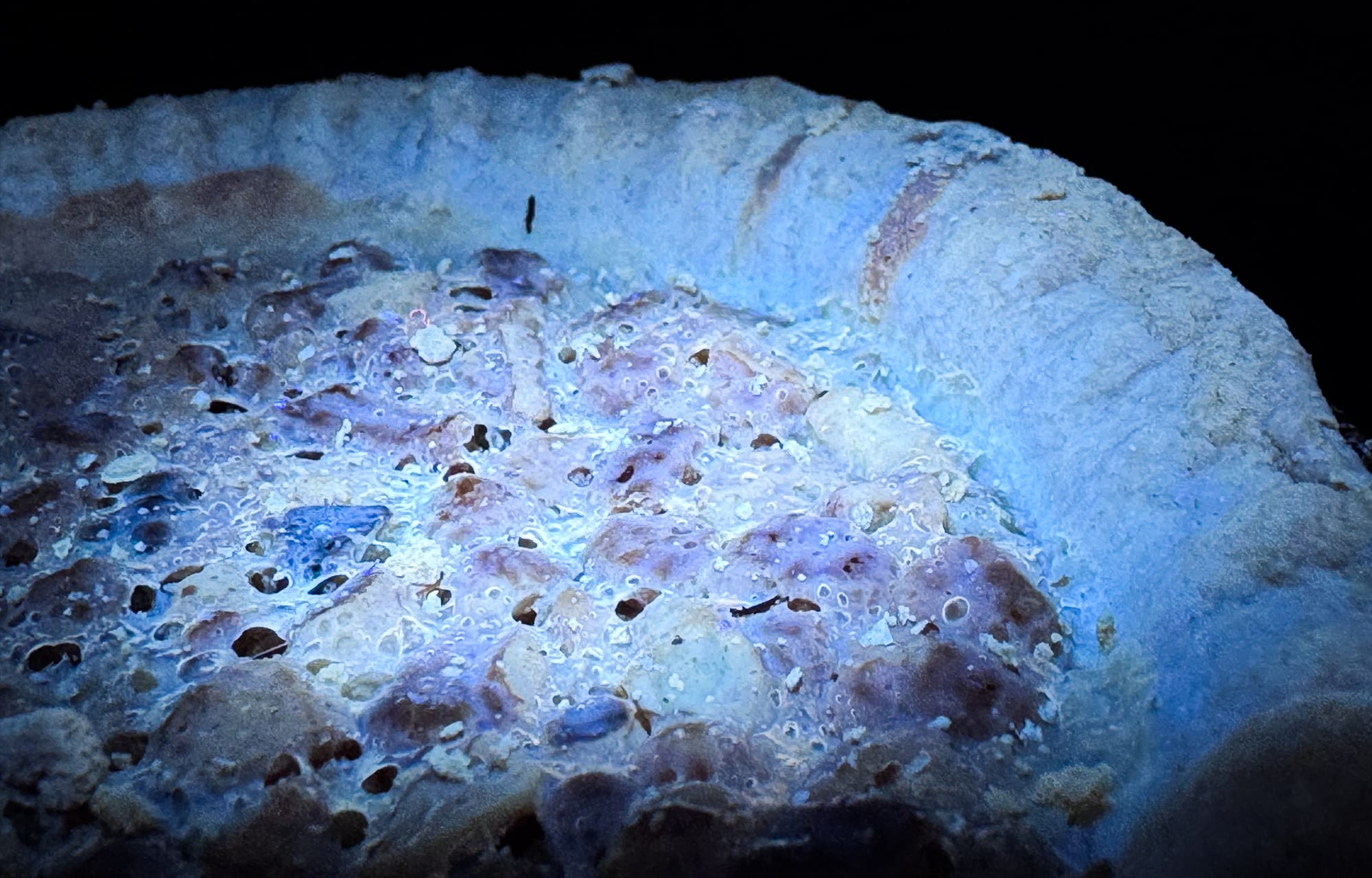
First image: Starbucks mini pumpkin pie (bought from grocery store Starbucks which is NOT on strike). Its crust was pretty pale, and it shows no sign of the brown color that the other crusts do. The pumpkin filling glows a dull orange. Second image: King Soopers mini pecan pie. Its crust is a combo of blue and toasty brown, and its filling is a bit darker and even more mixed-up between blue and toasty brown. Third image: Zooming in on the pecan pie. Bits of crust crumbs glow from various places on the surface of the pie. The bubbled surface of the pie itself is a blueish surface with holes showing the deeper, darker layers below. It's not in the least appealing looking, but it is interesting.
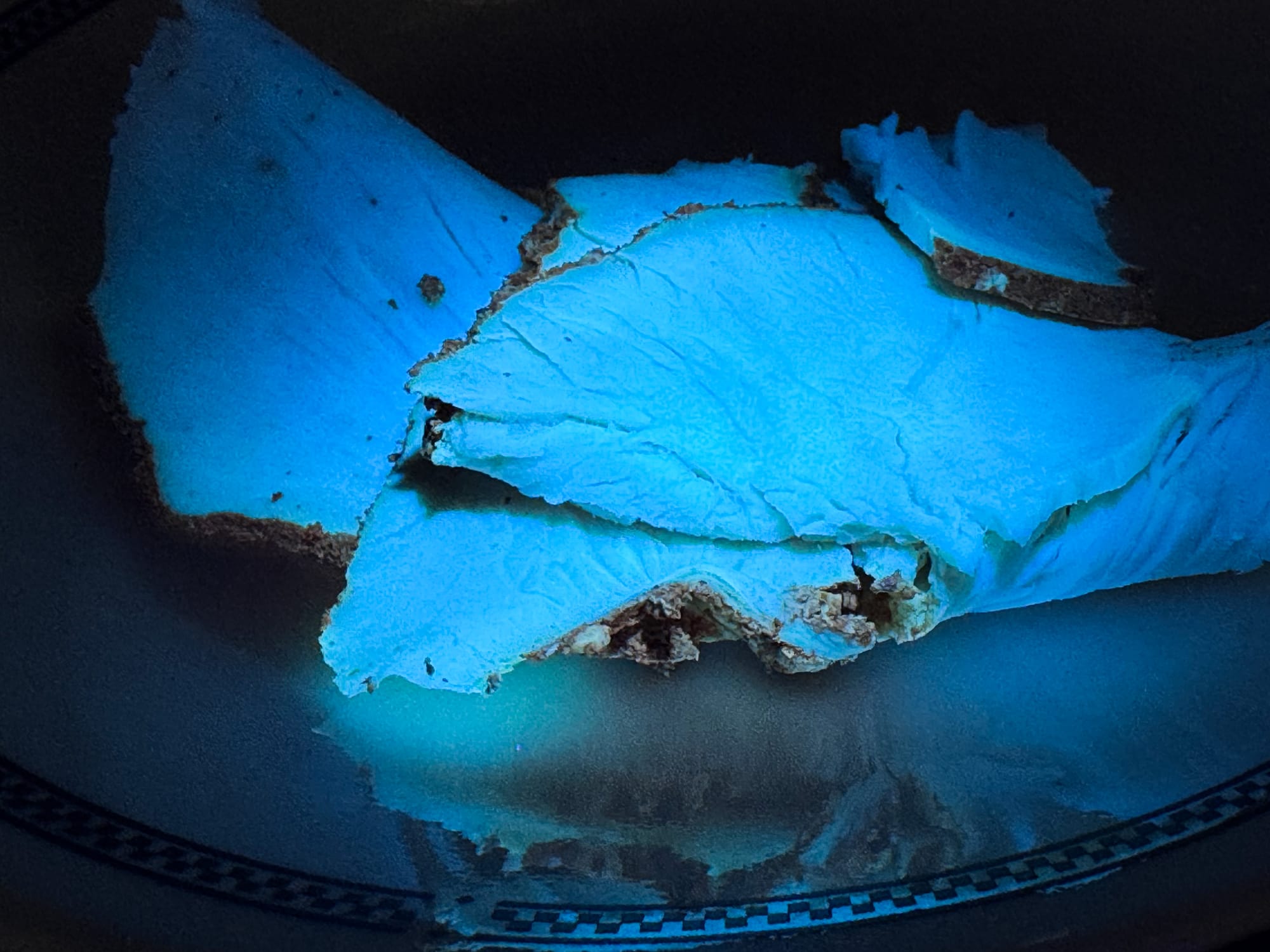
Cooked turkey is another of those shrug fluorescent foods. Something's glowing blue, but I don't know what it is.
What about cranberry sauce? Given the bright red that cranberry sauce is under visible light, might it be even more brilliant under UV? Alas, it is profoundly unappealing.
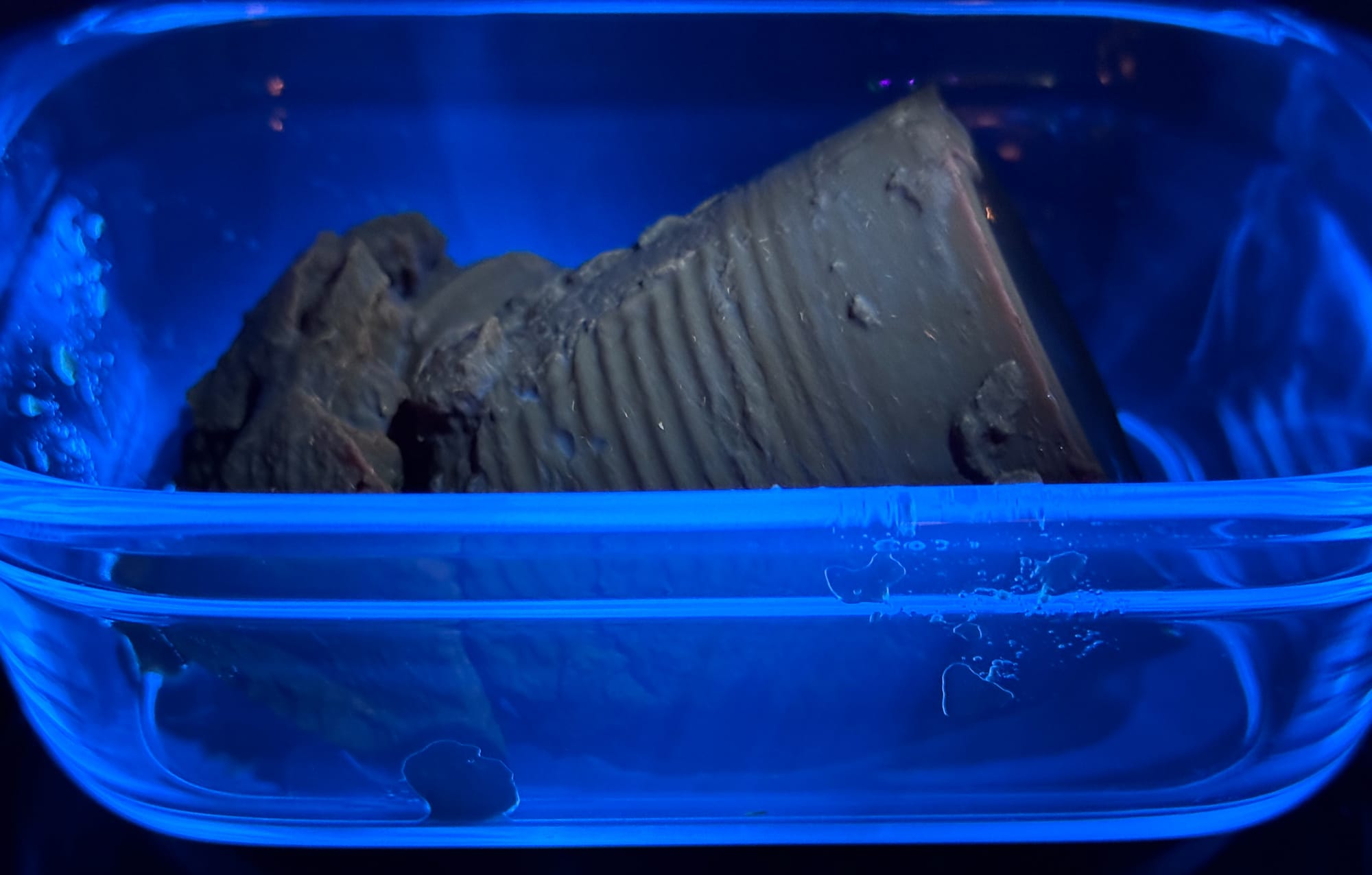
It's glowing red, but only very faintly, and maybe a little greenish as well? The result looks like canned mud.
I'm writing this the week before Thanksgiving so I didn't have an entire Thanksgiving feast available to experiment with (nor did I feel like making an advance feast just for this), so some of the traditional items are left out. If you have a UV flashlight handy, and access to various Thanksgiving specialties, please report back!
Hopefully, this quick survey of the Thanksgiving table helps reassure you that just because it glows under UV, it doesn't necessarily mean there's stuff in it that you should avoid.
Do you need to buy gifts for nerdy science people? Gifts for yourself? I have a laser merch store!
If you would like to get ME a gift (and yourself a gift, in the form of supporters-only bonus posts), you can support my blog. If you're already supporting me (as many of you have done for years), thank you SO MUCH! You are helping me cover the costs of hosting this website, and for buying random mini pies. For science.
