
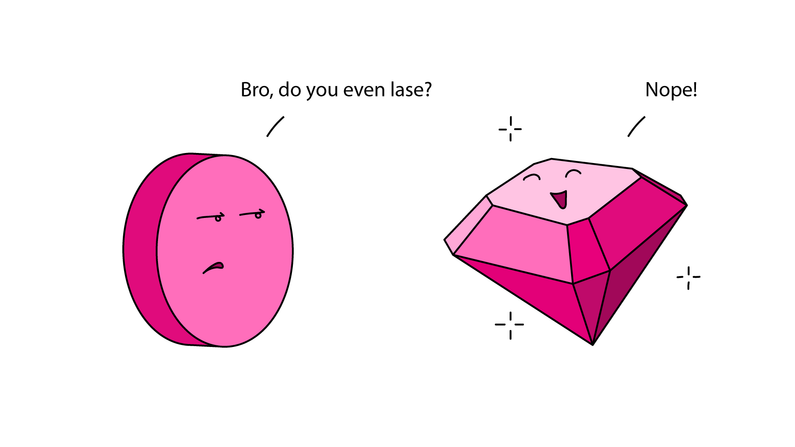
Laser gems
Some lasers are made from lab-grown gems, like specially-formulated ruby, garnet, or sapphire. When used in lasers, they're cut like plain cylinders. But they have all the hardness and brilliance of jewelry-quality gems, which means you can mess around with them if you like...
As a laser scientist I think this is pretty much the coolest thing ever. As they explain, they start with the crusty, bubbly rind of a lab-grown titanium sapphire crystal that's left over after the researcher got the laser-quality material out of the middle. That crusty laser rind is still sapphire, though, and polishes up beautifully into a pretty pink gem not found in nature.
What's particularly fun about this is titanium sapphire is like the Ferrari of laser gems, a high-end research crystal that can make incredibly short pulses of light. The short pulses are useful for high-precision timekeeping and quantum research, and can help researchers see through skin (only about a millimeter, but that's still useful for things like detecting skin cancer). I've used titanium sapphire lasers in the lab before. A whole table-sized laser usually just has a tiny pea-sized chunk of titanium sapphire crystal in it. And let me tell you, we would never be allowed to pick it up and turn it around in our hands and wear it around our necks. Voids the warranty, for sure.
I basically want the entire laser gem collection from gems of science, and they did not pay me to say this.
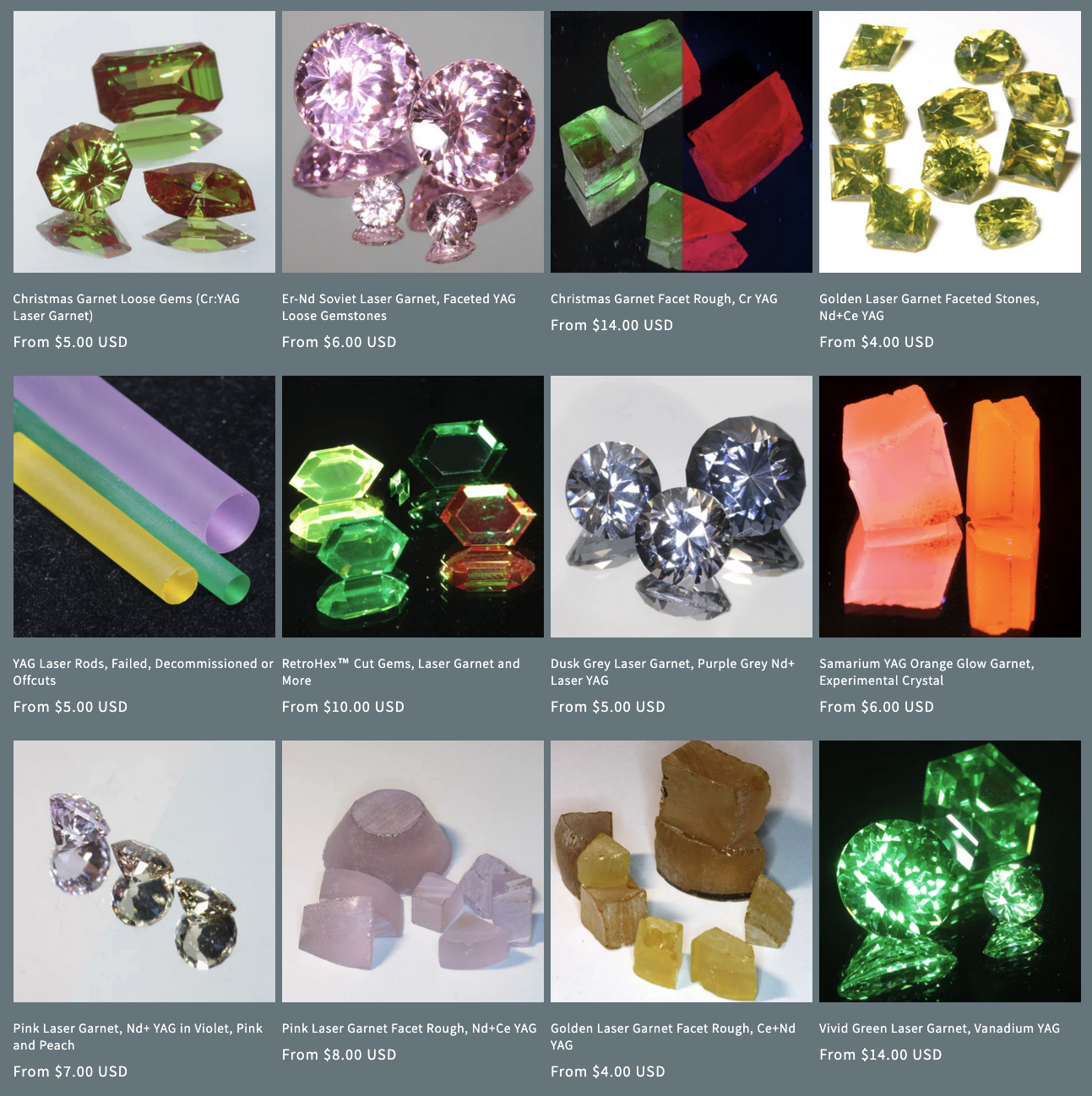
Which would be your laser crystal power gem?
