UCSD Jacobs School of Engineering wrote a neat article on my blog - check it out
[http://jacobsschoolofengineering.blogspot.com/2014/05/the-art-of-nanolasers.html]
!
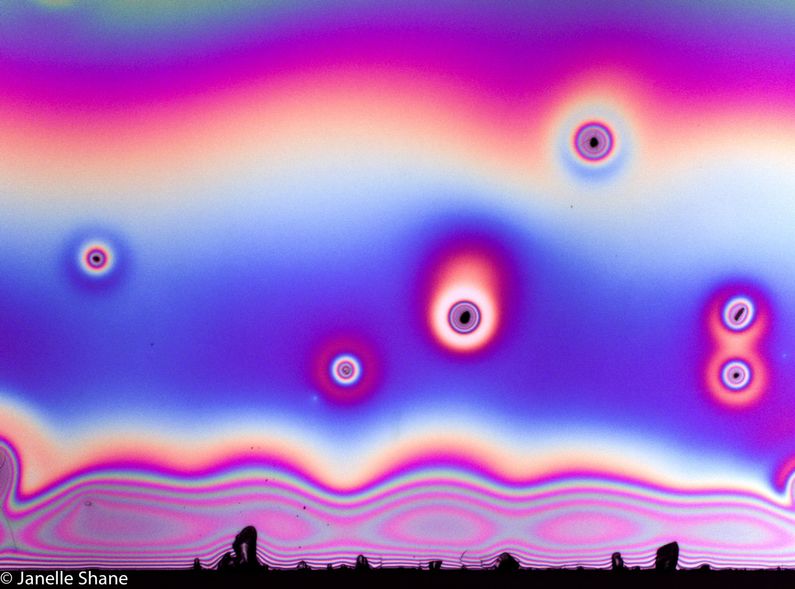
A strange landscape with an even stranger sky.
This is a microscope view of the edge of a smooth chunk of silicon, coated with
a thin clear plasticy layer of photoresist. Just like the colors in a soap
bubble, this colorless thin layer produces rainbow colors due to the wave
A strange landscape with an even stranger sky.
This is a microscope view of the edge of a smooth chunk of silicon, coated with
a thin clear plasticy layer of photoresist. Just like the colors in a soap
bubble, this colorless thin layer produces rainbow colors due to the wave
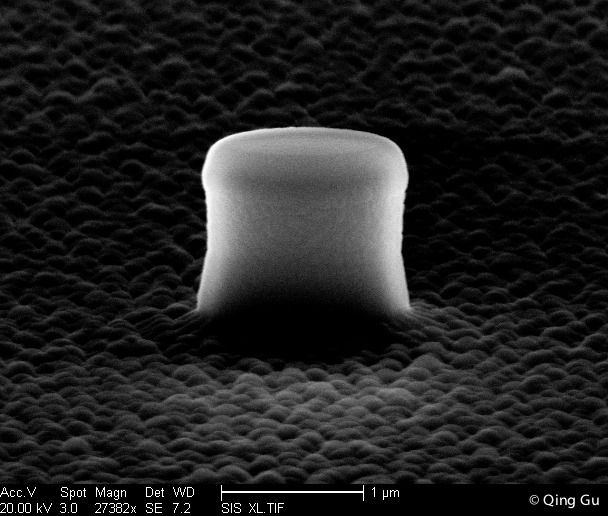
A Devil’s Tower-like monument rises above a sea of bubbles. It’s just another
day in the life of a nanolaser researcher.
The tower is a microscopic laser in the process of being built - here, it’s
shown after it was carved out of a flat sheet of
A Devil’s Tower-like monument rises above a sea of bubbles. It’s just another
day in the life of a nanolaser researcher.
The tower is a microscopic laser in the process of being built - here, it’s
shown after it was carved out of a flat sheet of
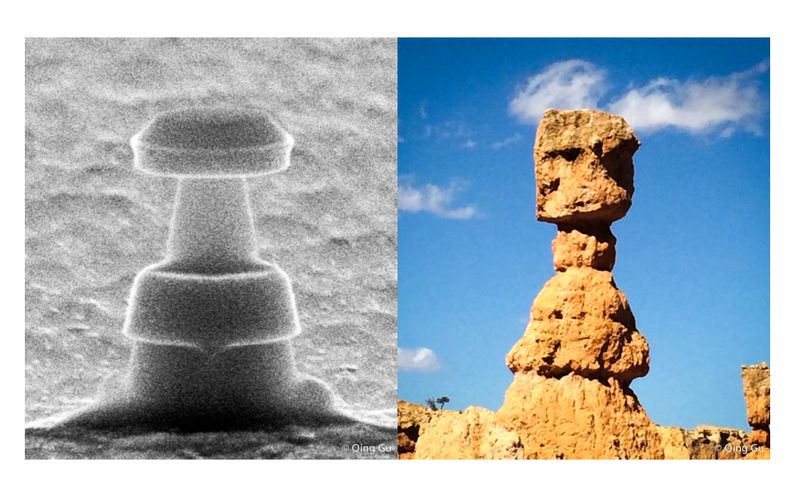
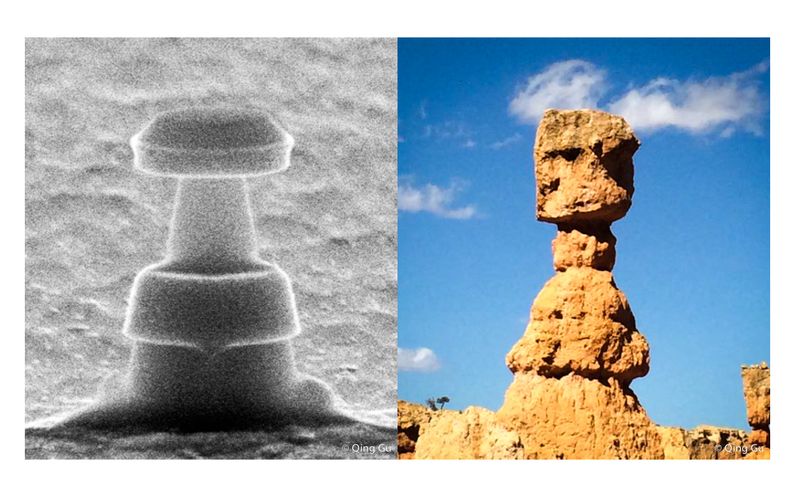
The one on the left is a nanolaser, carved by high-energy plasma and strong
acid, and invisible to the naked eye. The one on the right is a hoodoo, carved
by wind and rain, and is approximately 20 million times larger. And about 60
million times older.
The reason
The one on the left is a nanolaser, carved by high-energy plasma and strong
acid, and invisible to the naked eye. The one on the right is a hoodoo, carved
by wind and rain, and is approximately 20 million times larger. And about 60
million times older.
The reason
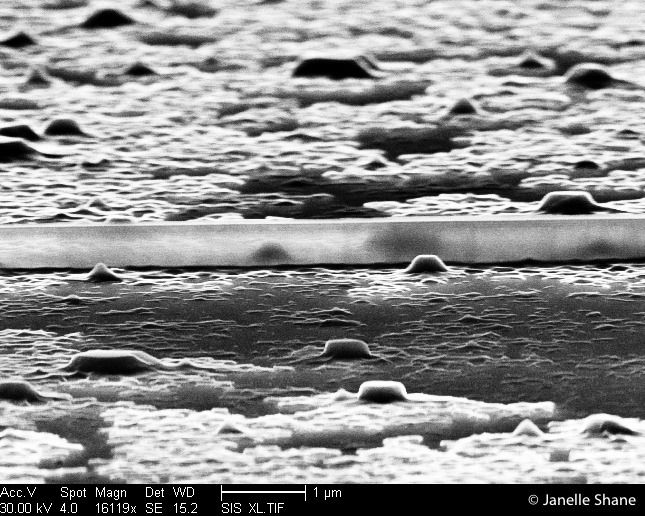
It looks like it could be an image of desert badlands - except for that
strangely translucent wall. In fact, this scene is much, much smaller. An ant
could step over the wall without ever noticing its existence.
This image was taken through an electron microscope, of a microscopic landscape
that’
It looks like it could be an image of desert badlands - except for that
strangely translucent wall. In fact, this scene is much, much smaller. An ant
could step over the wall without ever noticing its existence.
This image was taken through an electron microscope, of a microscopic landscape
that’
Resembling arrays of flaming islands, these formations are actually microscopic,
etched out of semiconductor.
This semiconductor material is what we use to make microscopic lasers - we start
with a vast, featureless sheet of semiconductor and cover certain areas with a
protective layer of glassy photoresist. Then we blast the whole