AI Weirdness: the strange side of machine learning
Janelle Shane

Janelle Shane

Total 853 Posts
Tuesday February 11, 2014

Tuesday February 11, 2014

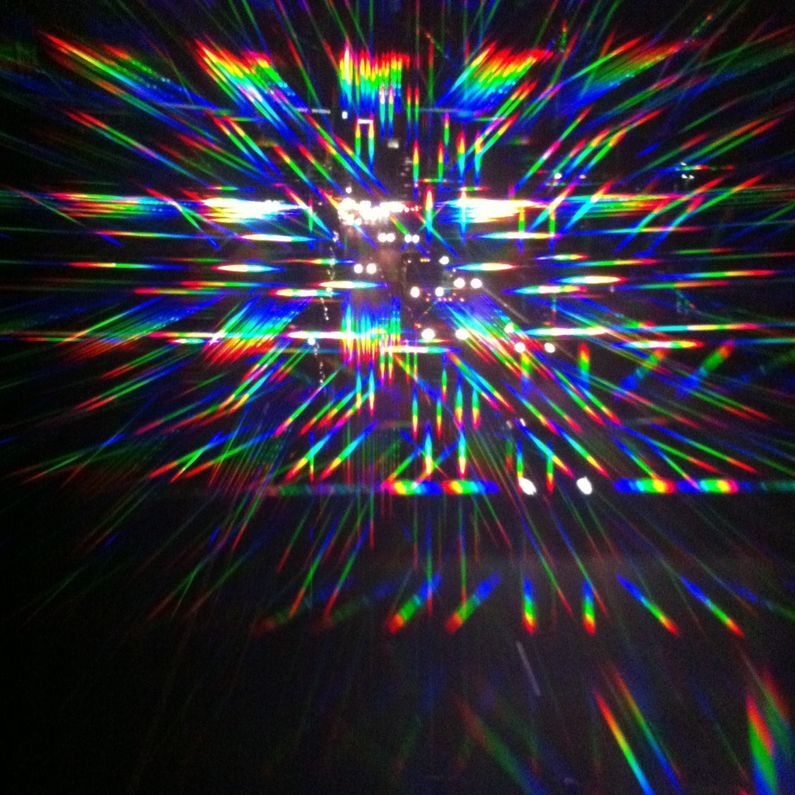
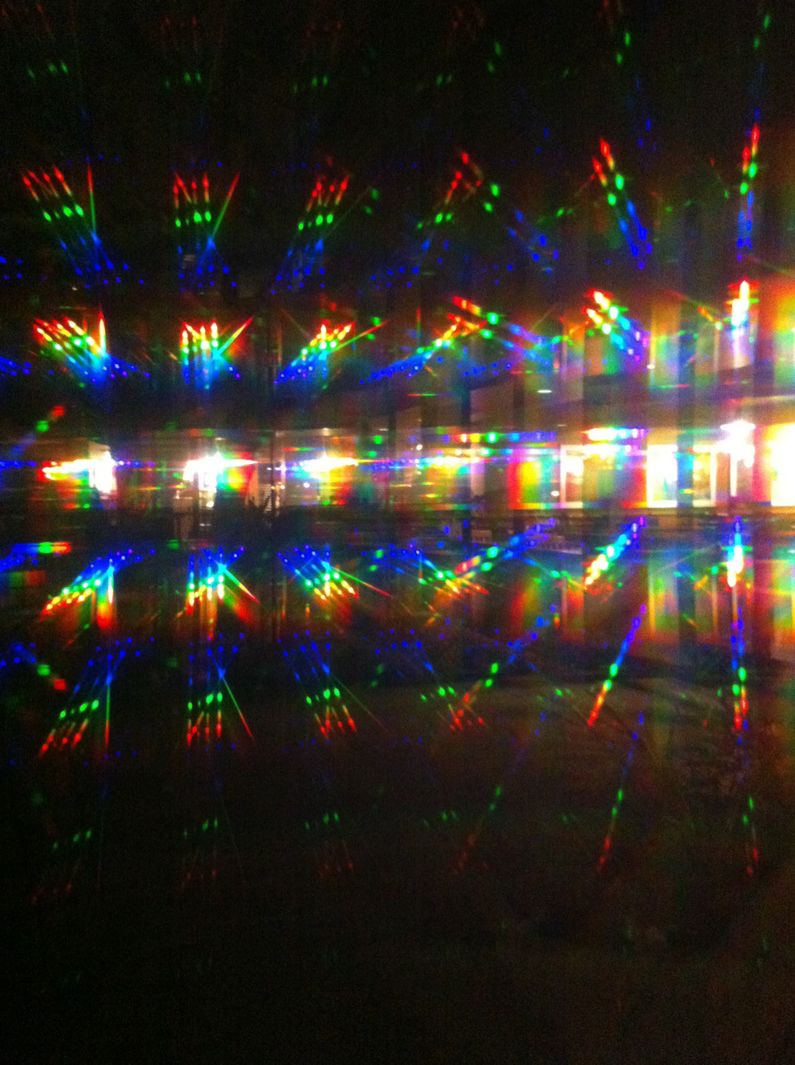
This is what an ordinary coffee shop looks like through diffraction glasses, which act like prisms to separate white light into a rainbow of colors. In this shot, you can see that not all white sources are alike - a few of them produce a continuous rainbow of colors, while most
(Untitled)

(Untitled)

This is what an ordinary coffee shop looks like through diffraction glasses, which act like prisms to separate white light into a rainbow of colors.  In this shot, you can see that not all white sources are alike - a few of them produce a continuous rainbow of colors, while most
Sunday February 09, 2014

Sunday February 09, 2014

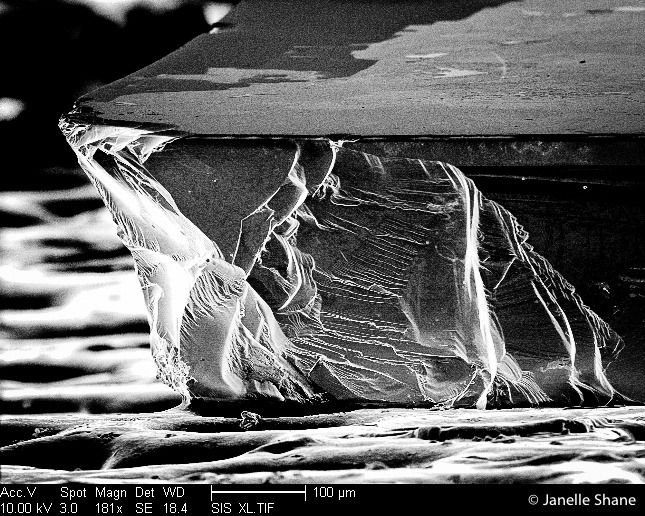
A rare view of the entire cross-section of one of my samples, which seems to loom like a massive iceberg over choppy seas. This sample is a thin layer of semiconductor (a material we use for making lasers, among other things), bonded to a much thicker chunk of glass.
(Untitled)

(Untitled)

A rare view of the entire cross-section of one of my samples, which seems to loom like a massive iceberg over choppy seas. This sample is a thin layer of semiconductor (a material we use for making lasers, among other things), bonded to a much thicker chunk of glass.
Sunday February 02, 2014

Sunday February 02, 2014

Fracture patterns at the edge of a broken wafer (broken on purpose, for once). The lighter top layer is silicon, and the darker bottom layer is glass. The glass looks darker than the silicon because it’s a better electrical insulator - the electron beam microscope makes an image by scanning
(Untitled)

(Untitled)

Fracture patterns at the edge of a broken wafer (broken on purpose, for once).  The lighter top layer is silicon, and the darker bottom layer is glass.  The glass looks darker than the silicon because it’s a better electrical insulator - the electron beam microscope makes an image by scanning
Friday January 24, 2014

Friday January 24, 2014

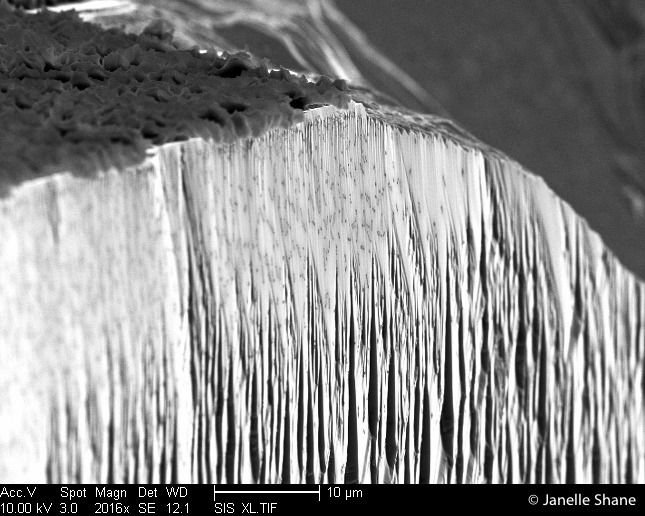
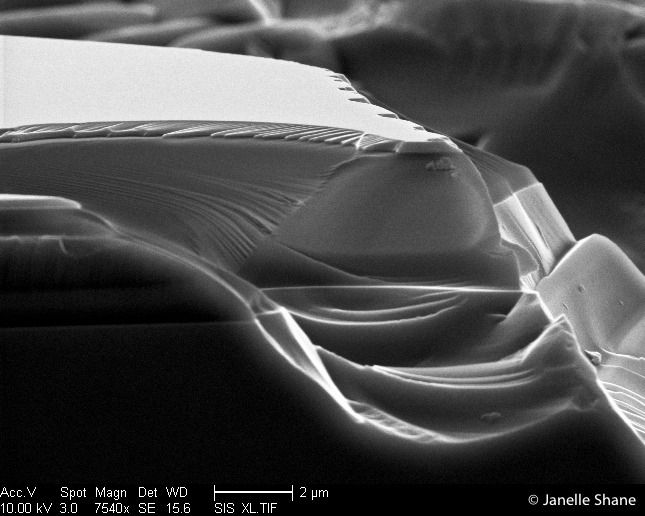
Microscopic fracture patterns appear clifflike on the edge of one of my samples. This entire view is less than 10 micrometers high, meaning that it covers about a tenth the thickness of a typical human hair. We usually don’t get patterns like these, because we use a special wafer
(Untitled)

(Untitled)

Microscopic fracture patterns appear clifflike on the edge of one of my samples.  This entire view is less than 10 micrometers high, meaning that it covers about a tenth the thickness of a typical human hair.  We usually don’t get patterns like these, because we use a special wafer
Friday January 17, 2014

Friday January 17, 2014

The crazy-huge mountains of the nanoworld! The strange waves and scallops are what is left of the protective mask I used to shield the semiconductor material below from a high-energy etching plasma. The mask held up to the plasma, although it was probably damaged a bit - and then
(Untitled)

(Untitled)

The crazy-huge mountains of the nanoworld!  The strange waves and scallops are what is left of the protective mask I used to shield the semiconductor material below from a high-energy etching plasma.  The mask held up to the plasma, although it was probably damaged a bit - and then
You've successfully subscribed to AI Weirdness
Great! Next, complete checkout for full access to AI Weirdness
Welcome back! You've successfully signed in.
Unable to sign you in. Please try again.
Success! Your account is fully activated, you now have access to all content.
Error! Stripe checkout failed.
Success! Your billing info is updated.
Error! Billing info update failed.